Most people choose a bed's upholstery the way they choose a shirt: by looking at it. That works right up until the first monsoon, when you learn that a bedroom in Colombo sits above 75% humidity for months at a time, and that the material wrapped around your bed has been quietly reacting to that the whole while. Leather and fabric both work here. They just ask for different things.
The word "leather" is doing a lot of work
Before comparing materials, it is worth knowing which material you are actually being sold. "Leather" on a furniture tag can mean a full hide, or it can mean leather scraps ground up, mixed with adhesive and rolled onto a backing sheet. That second one is bonded leather, and it is common at the lower end of the market. There is also PU leather, which is not leather at all: it is plastic, embossed with a grain pattern.
The difference matters most in our climate, because of how each one fails. Genuine leather ages: it softens, the colour deepens, and after many years it may crack. Bonded and PU age differently. The adhesive layer separates from its backing and the surface begins to peel and flake, usually starting where you sit or lean. Heat and humidity bring that day forward.
Four checks, none of which need an expert:
- Look for imperfection. Real hide has irregular grain, faint wrinkles, the odd healed scar. A pattern that repeats exactly is a printed one.
- Smell it. Genuine leather smells like leather. Bonded and PU carry a faint chemical note.
- Look at an edge or the underside. Real leather is the same material through its thickness. Bonded and PU show a fabric or paper backing behind a thin coloured skin.
- Ask in writing. "Is this genuine leather, and which hide?" A seller who deals in the real thing will answer plainly. Vagueness is its own answer.
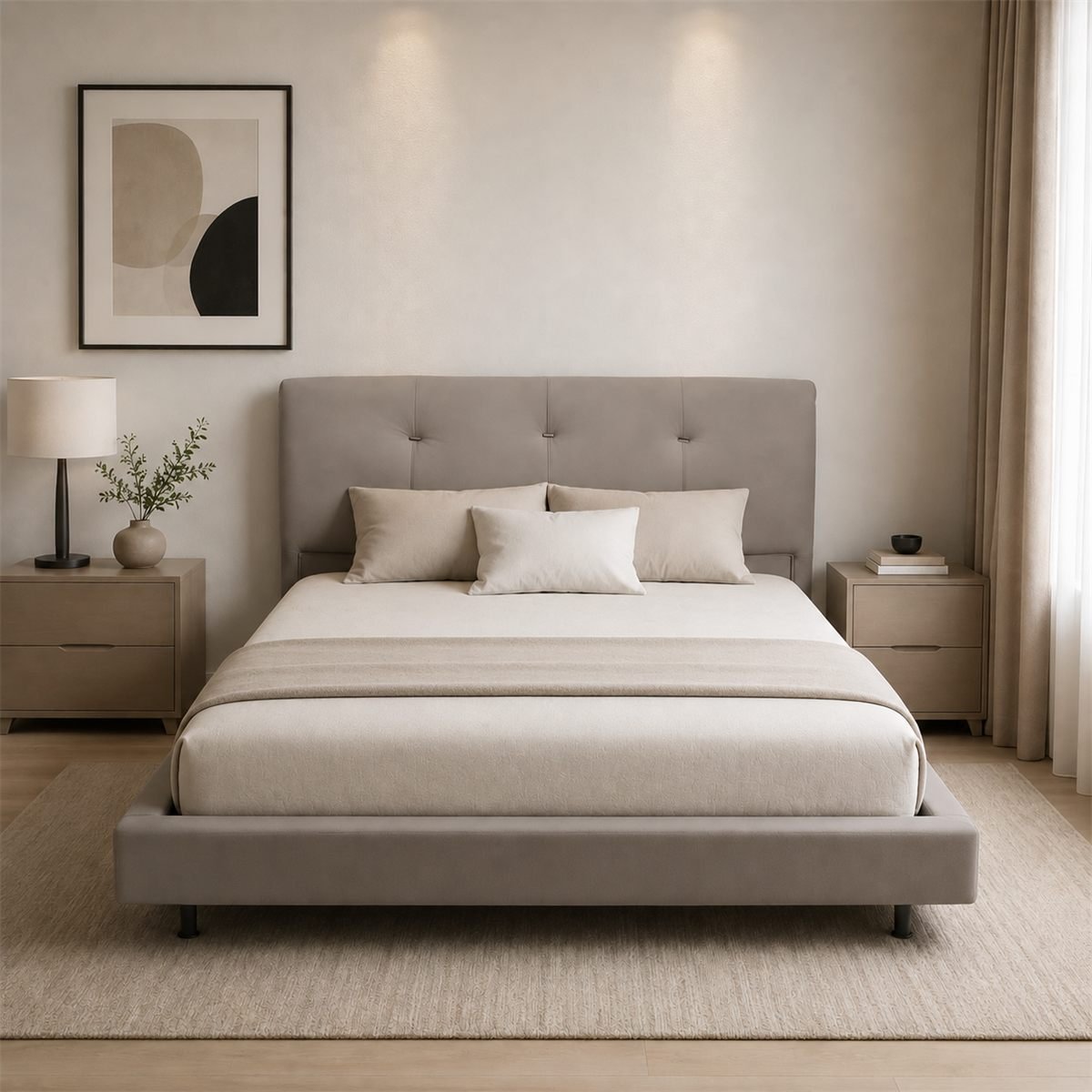
How each one lives in a Sri Lankan bedroom
Genuine leather handles our humidity well, which is why it has been used on furniture in tropical households for a very long time. It does not absorb spills, it does not hold onto dust, and a damp cloth deals with almost anything. It feels cool to the hand when you first lean back. What it does not enjoy is a room that stays damp and still for weeks with no air moving through it, which is when mould can take hold on any surface, leather included. Airflow solves that, and most Sri Lankan bedrooms already have a ceiling fan doing the job.
Corded fabric is the softer thing to lean against and the warmer thing in the room, in both senses. It is quieter than leather, it does not stick to bare skin on a hot night, and it makes a bedroom feel less formal. The trade is that fabric is absorbent. A spilled cup of tea is a job rather than a wipe, and fabric holds dust, which matters if anyone in the house has dust allergies.
Neither material is the "cool" choice, whatever a showroom tells you. What sits under you at night is the mattress, and that is where sleeping temperature is actually decided.
Which one suits your household
The honest way to choose is to picture an ordinary Tuesday rather than a photograph.
Choose leather if there are young children or pets in the house, if anyone eats or works in bed, if you sit up to read most nights, or if you simply want the surface that recovers fastest from an accident. It is also the choice if you want the bed to still look deliberate in ten years.
Choose fabric if the bedroom is somewhere you want to feel soft rather than sharp, if you like leaning back against something warm, or if the room already has a lot of hard surfaces. It photographs beautifully and it is the gentler thing to wake up next to.
One practical note that decides it for some people: at Kira, genuine calfskin is made in Queen and King, while the fine-wale corded fabric is made in Queen only. If you need a King, the choice has been made for you.
What each one asks of you
Both materials are low-effort. They are just low-effort in different ways.
Leather wants dusting with a dry cloth, spills wiped straightaway rather than left, and conditioning with a proper leather cream from time to time. Humidity is harder on leather than a dry climate is, so lean towards conditioning more often than an imported care label suggests, and keep the bed out of direct sun, which does more damage here than moisture ever will.
Fabric wants a monthly pass with a soft-brush vacuum attachment and prompt spot-cleaning with cool water and mild soap. Keep it out of the spray line of a window you leave open in the rain.
Our full care routine for both, with the specifics, sits in the bed FAQs. If you would rather ask a person, message us on WhatsApp.
The short version
Ask what the leather actually is before you compare prices, because genuine hide and bonded sheet are not the same purchase wearing different price tags. Then choose for your household rather than for the photograph: leather for busy rooms and long life, fabric for softness and warmth. Every KIRA bed comes in genuine calfskin or premium fine-wale corded fabric, in three headboard designs, rated to 300kg and backed by a 2-year structural warranty. No other genuine leather bed in Sri Lanka starts at our price.