An aircon unit cools a Colombo bedroom faster than anything else, but it isn't always the answer. Electricity in Sri Lanka now runs above Rs 50 per kWh in the higher residential tiers, a 1.5-tonne split unit run from 10pm to 6am can add Rs 12,000–18,000 to a monthly bill, and there are nights when the grid wobbles regardless. Here is what the international sleep-temperature research suggests, and what works in a tropical home that isn't running cold air all night.
The temperature your body actually wants
Sleep researchers broadly agree on the window. The US National Sleep Foundation places the ideal bedroom temperature for adults between 15.6°C and 19.4°C. The World Health Organization's housing-and-health guidance recommends a minimum of 18°C in temperate climates. Most tropical-medicine research relaxes the upper bound: 22–24°C is generally considered acceptable for sleep in hot-humid climates, particularly when relative humidity is below 70%.
The catch in Sri Lanka isn't the temperature alone; it's the combination of temperature, humidity, and stagnant air. A 28°C bedroom at 85% humidity feels much warmer than the same temperature at 60% humidity, because sweat doesn't evaporate. The "feels-like" temperature (sometimes called the heat index) at 28°C and 85% humidity is closer to 32–34°C, well above any sleep-friendly range. Most of the techniques below are aimed at lowering humidity and moving air, not just lowering temperature.
Six things that work
1. Cross-ventilate before you sleep
Most Sri Lankan bedrooms have one window. If yours has two, open both an hour before bed to flush warm daytime air, then close the side that faces traffic noise or the prevailing rain and leave the quieter one cracked. Even a 5–8cm opening is enough for slow exchange overnight. If you only have one window, open it and leave the bedroom door ajar: the rest of the house will pull air through.
2. Use the ceiling fan properly
Fans don't cool air — they cool you. A fan running over an empty bedroom is doing nothing. A fan running over your body, however, accelerates sweat evaporation and creates a perceived temperature drop of 2–4°C even when the actual air temperature hasn't moved. Two practical refinements: (1) set the fan to its lowest speed that you can still feel: overnight, a strong fan is overstimulating, while a gentle one disappears into the background, and (2) ensure the blades pull air down toward you, not up toward the ceiling. Most modern fans have a directional switch you can flip from "summer" (down) to "winter" (up); for tropical sleep you almost always want "summer".
3. Choose the right bedding
The single biggest mistake we see is the wrong bedsheet. Polyester and microfibre sheets trap heat and moisture against your skin, a fact established repeatedly in textile-physiology research and codified into standards like ISO 11092 (the "wet-resistance" rating used for sportswear). For tropical sleep, the order of merit is roughly:
- Pure cotton percale: crisp, breathable, the workhorse for Sri Lankan beds.
- Linen: outstanding breathability and thermal regulation, gets softer with washing.
- Bamboo or Tencel: softer feel, very good moisture wicking, slightly higher cost.
Skip flannel, sateen, and anything with a "wrinkle-free" finish (which usually means a polyester blend). Aim for thread counts of 200–400; higher counts can actually trap more heat by tightening the weave.
4. Cool your body, not just the room
Your core temperature naturally drops 0.5–1°C as you fall asleep. Helping it drop is more efficient than trying to cool the room. Three small habits with measurable effects:
- A lukewarm shower 60–90 minutes before bed. Counterintuitively, a warm (not hot, not cold) shower draws blood to the surface and accelerates heat loss as your skin cools afterwards. The effect on sleep onset is well documented in meta-analyses of sleep hygiene research.
- Cool your wrists or feet. The skin at the wrist and the soles of the feet has unusually high blood flow and dumps heat efficiently. A cool washcloth on either spot for two minutes before sleep is faster than waiting for the room to cool.
- Avoid heavy meals and alcohol within two hours of bed. Both raise your core temperature for hours afterwards. Tropical climate intensifies the effect.
5. Reduce daytime heat load
The single biggest factor in how warm your bedroom feels at 11pm is how much heat it absorbed at 2pm. Practical changes:
- Close curtains or blinds during peak sun hours. A white or pale curtain on the west-facing side of the room can reduce afternoon temperature gain by 3–5°C, particularly in upper-floor flats where the roof slab heats up.
- Switch warm-spectrum bulbs. Old incandescent and warm-tone halogen bulbs throw heat as well as light. LED bulbs above 4000K (cool white) are cooler in every sense.
- Keep electronics off standby. A TV, modem, and laptop charger together can quietly add the heat of a small candle to your room. Switching them off at the wall when you go to bed is small but cumulative.
6. Pick a mattress that vents heat
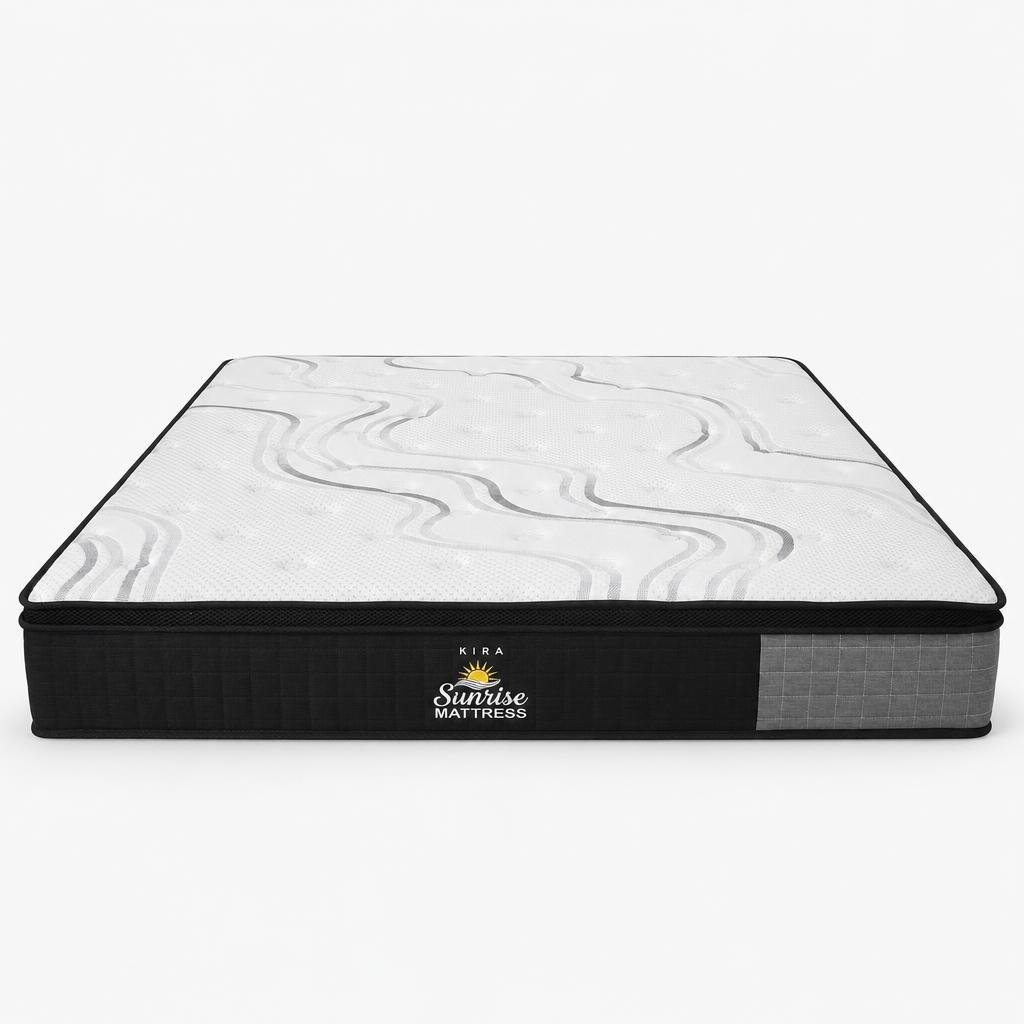
This one is structural, not behavioural. A solid memory-foam mattress, however premium, traps body heat in the tropics. Pocket-spring mattresses move air through the core; gel-infused comfort layers conduct heat away from the skin; knitted covers let it escape. We cover this in detail in our mattress buying guide.
What works in other humid-tropical countries
Sri Lanka is not unique. Singapore, southern Vietnam, Malaysia, parts of Indonesia, Thailand and India all sit in a comparable thermal envelope. Architectural and design traditions in each have converged on a similar set of solutions: high ceilings, ceiling fans, cross-ventilation, lightweight cotton bedding, raised beds with airflow underneath, and timed (rather than continuous) aircon use. Singapore's national guidance on indoor cooling, for example, recommends running aircon at 25°C rather than 22°C: slightly warmer, much more efficient, and within sleep-friendly range.
The point
You probably don't need to drop the bedroom to 18°C to sleep well. You need to drop it from "feels like 34" to "feels like 26", lower the humidity right around your body, and get the air moving. Most of that is free, the rest of it pays back fast. And if you do run an aircon, run it efficiently. Combined with the techniques above, you can hold a comfortable bedroom at 25–26°C, which is gentler on your body, your sleep, and your electricity bill than a 22°C target.