One of the most common messages we get in week one of a new mattress order is a version of: it feels different — is something wrong? Almost always, nothing is wrong. The mattress is doing exactly what it should, and your body is doing exactly what it should. They simply need a few weeks to meet in the middle. Here's what's happening, why, and what the global sleep-research community says about it.
What's happening to the mattress
Every mattress is built with materials that are slightly compressed during manufacturing, packing, and shipping. Vacuum-rolled mattresses are the most obvious example: the foam layers have spent days under high compression and need to fully decompress and re-expand. Even non-rolled mattresses arrive with the comfort layers slightly denser than their final state.
Through the first two to four weeks, three things happen:
- Foam comfort layers relax. Memory foam softens and contours more accurately to your body as it warms with use and as residual compression is released. Cooling-gel foams typically reach final feel between weeks two and three.
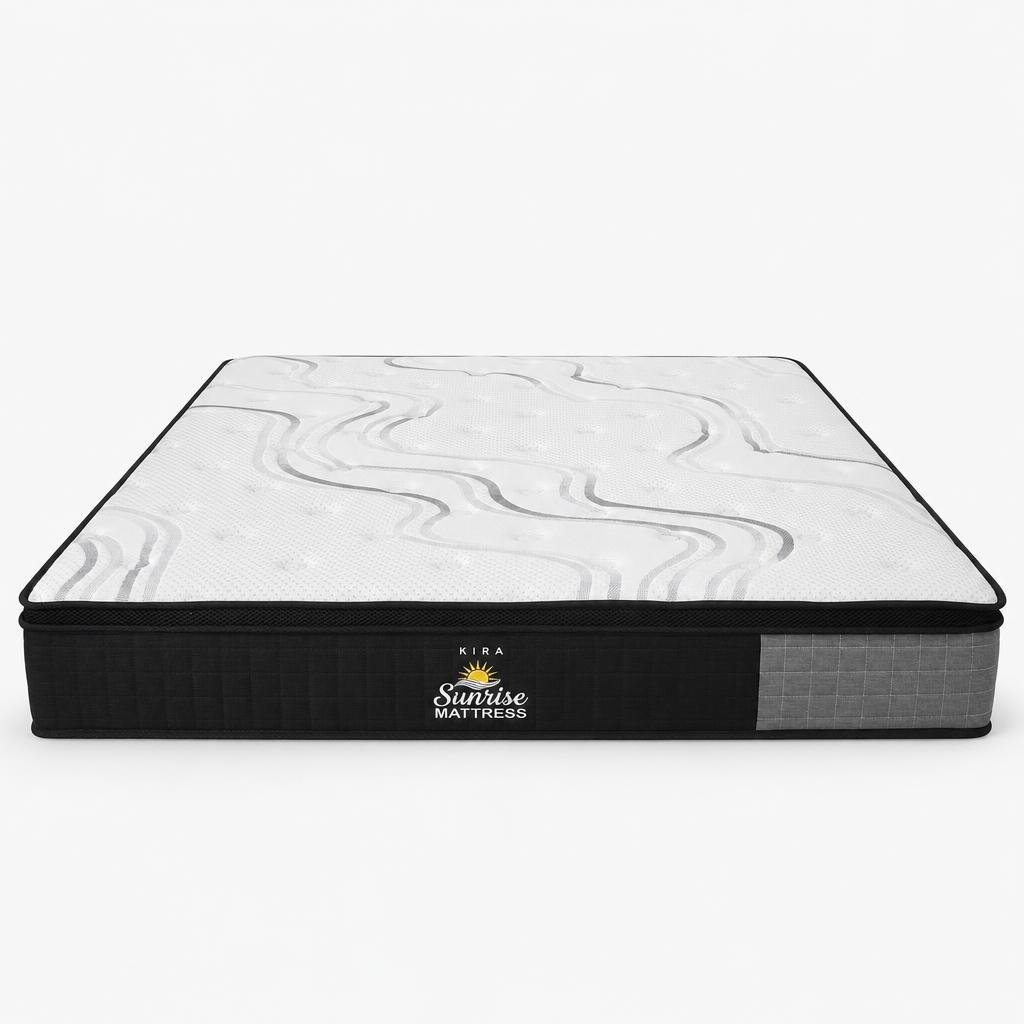
- Pocket springs settle. Individually pocketed coils are tensioned by the fabric sleeve and need a small amount of cycling (i.e. you sleeping on them) before they reach their long-term support behaviour.
- The cover quilting eases. The top quilted layer is taut from manufacture and softens with the heat and pressure of regular use.
This is the "break-in" period. The Better Sleep Council in the US, the National Bed Federation in the UK, and the European Sleep Research Society all describe the same window: roughly 21 to 30 days. Sealy, Tempur-Pedic, Silentnight and IKEA's mattress documentation use comparable timelines.
What's happening to your body
This is the part most buyers underestimate. If you have been sleeping on the same mattress for five, eight, ten years, your spine, hips, and shoulder muscles have organised themselves around the contour of that specific surface. The deeper the dip in the old mattress, the more your body has adapted to compensate. Move to a new, properly supportive bed, and those muscles need to relearn neutral alignment.
For most adults this takes between one and three weeks. During that window, you may notice a few things that often get misread as a "wrong mattress":
- Mild lower-back stiffness in the mornings. Postural muscles adapting. Usually peaks at days three to seven, then fades.
- Feeling the mattress is "too firm." If you are coming off a softer or worn bed, the new bed offers more resistance everywhere. Your body reads that as firmness, even when the surface is actually medium.
- Shoulder or hip soreness for side sleepers. The comfort layer is still relaxing. Side sleepers, who concentrate pressure at hip and shoulder, feel this first.
- Slightly disturbed sleep. Anything new in the bedroom (a different pillow, a different bed, a different room) affects sleep quality for a week or two. The American Academy of Sleep Medicine refers to this as the "first-night effect."
The global research, briefly
A 2009 study by Jacobson et al. (published in Applied Ergonomics) followed 59 patients with low-back pain and tracked sleep quality and back-pain ratings after replacing aged mattresses. Most reported improvement, but the improvement was statistically clear only after the third week, pointing to the importance of allowing adaptation time before judging a mattress.
The widely cited Kovacs et al. Lancet trial showed that medium-firm mattresses produce better long-term back-pain outcomes than firm mattresses. But that finding was based on 90-day follow-up, not first-night impressions. Across the international literature, the consistent message is the same: judge a mattress after at least three weeks, ideally after a full month.
How to help the adjustment along
- Sleep on it every night for the first month. Skipping nights resets the foam-relaxation curve and resets your body's adaptation. Consistency matters more than perfection.
- Rotate the mattress head-to-foot at the two-week mark. Then again at the one-month mark, then every three months for the first year. This evens out the early compression and prevents body impressions forming.
- Use a proper bed base. Slats no more than 7cm apart, or a solid platform. Putting a new mattress on a base it wasn't designed for is the single most common cause of buyer remorse: the bed feels wrong, but the mattress is fine.
- Mind the pillow. A new mattress changes the height of your shoulder relative to your neck. A pillow that was correct on the old bed may now be too high or too low. Adjusting pillow loft is often the fastest fix for shoulder or neck soreness in week one.
- Air the bedroom. A new mattress, particularly one delivered vacuum-rolled, releases a mild "new-foam" smell for the first 48–72 hours. Open the windows during the day for a week and it disappears completely. This is normal and complies with international VOC emission standards (OEKO-TEX, CertiPUR-US).
When to actually worry
Past day 30, most "is something wrong?" worries answer themselves. But there are three signals that mean it's worth a conversation rather than waiting it out:
- A visible dip. A genuine sag of more than 3.8cm under normal use within the warranty period is a manufacturing issue, not break-in. Most reputable manufacturers, ourselves included, will put this right under warranty.
- Pronounced new-onset back pain. Some morning stiffness is normal in weeks one to two. Pain that worsens after week three, particularly if you didn't have it before, may mean the firmness genuinely isn't right for your body type or sleeping position.
- Persistent noises. A pocket-spring mattress should be near-silent. Audible squeaks from inside the mattress within the warranty period are unusual and worth flagging.
If you're past three weeks and still uncertain, message us on WhatsApp. We can usually diagnose what's happening from a short conversation and a few photos of how the mattress sits on your bed base.