When we set out to make our first mattress, we didn't start with a layer diagram. We started with a bedroom: 28°C at 2am, humidity above 75%, a ceiling fan doing its best. Most mattresses sold in Sri Lanka (including most labelled "cooling") descend from designs drawn up for rooms 10 degrees colder. We wanted to know what a mattress looks like when you start from our room instead.
This is how the Sunrise ended up with the layers it has, including the ideas we looked at and turned down.
What we turned down first
- An all-foam build. Solid memory-foam mattresses are cheaper to make and ship, and the margins are better. But foam is an insulator; that's the physics of it. In a tropical bedroom an all-foam block holds your body heat against you all night, no matter how much cooling gel is layered on top. We've written about this in our buying guide. A spring core that air can actually move through was non-negotiable, so the all-foam option went first.
- Phase-change covers. "PCM" fabrics absorb body heat as their embedded waxes melt: impressive in a cool European bedroom, where the night gives them time to recharge. In a Sri Lankan bedroom they typically reach capacity within a few hours and then sit there, fully charged, doing nothing until morning. The premium didn't buy our customers anything past midnight, so we spent the money on the spring core instead.
- A plush, deep-sink top. Deep-conforming pillow-tops feel indulgent in a showroom. They also wrap warm material around more of your body: exactly wrong for our humidity, and the first layer to soften and dip with age. We went medium-firm on the firmer side (about 7/10), which keeps less of you in contact with the bed and holds its feel for longer. The orthopaedic research points the same way.
What earned its place
Every layer that made it in had to answer one question: what does it do at 2am in a humid room?
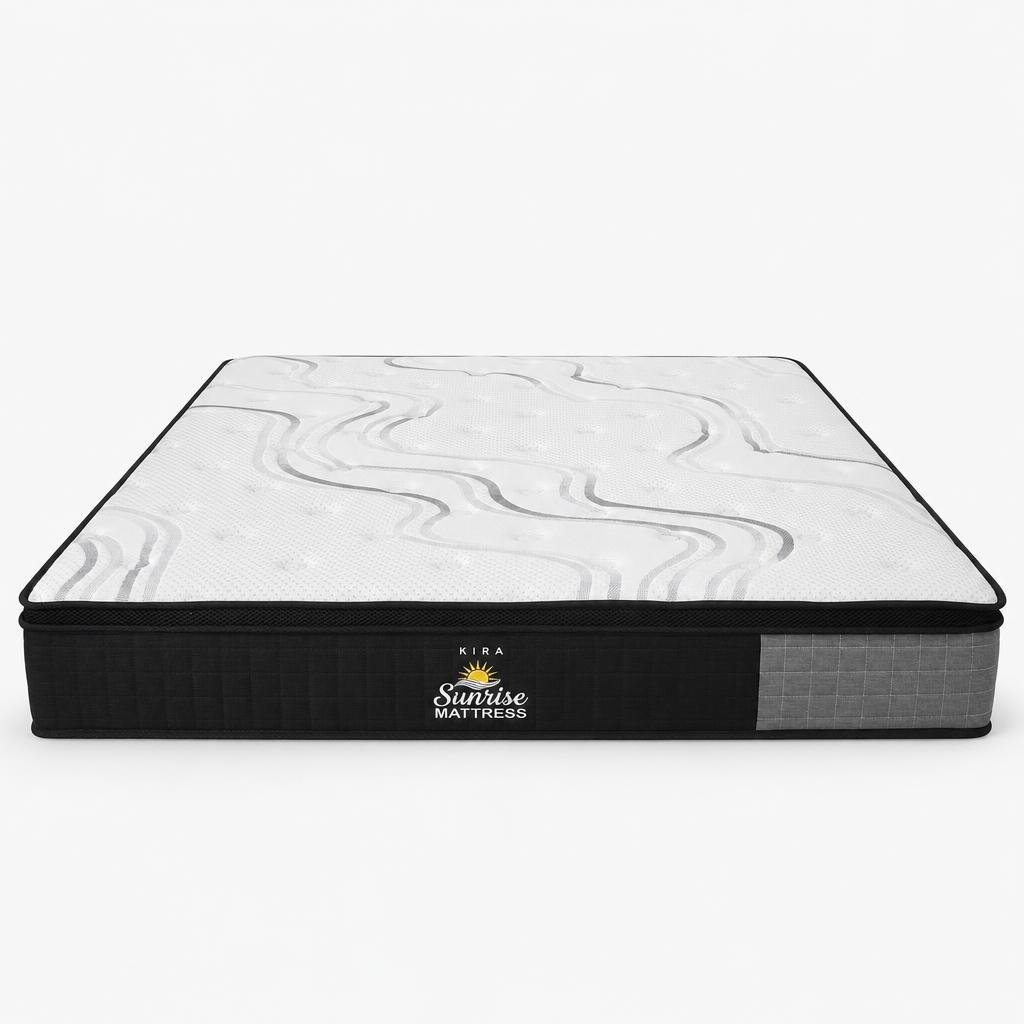
The water-resistant cool-touch knit on top, because the cover does more for sleeping temperature than people expect, and because in real homes, mattresses meet spilt tea, sweat, and small children. The gel memory foam beneath it, for the settle-in cooling and pressure relief at the shoulder and hip. We're upfront that the cool-touch effect is strongest in the first minutes; through the night, the springs do the heavier work. The 5-zone pocket spring core, because individually wrapped springs move air through the mattress all night, hold your spine in a neutral line, and keep a partner's tossing on their side of the bed. The reinforced edge, because Sri Lankan bedrooms run small and people genuinely sleep to the edge. And the bamboo-charcoal base fabric, to help the underside (the part that never sees daylight) stay drier in our humidity.
Then we slept on it
Specification sheets don't sweat. Before we put our name on the Sunrise, we slept on the prototypes ourselves: in our own bedrooms, with ceiling fans, through ordinary humid nights. Not a laboratory; a real room, and a fair trial.
That stage settled the biggest decision in the build: the comfort layer. Early prototypes were built around a latex core; the mattress we ship uses cooling gel memory foam instead. Two things decided it. The first was feel: sleeping on both, the gel build was simply the one we kept choosing. The second was heat: per our manufacturer, the gel layer dissipates body heat better than the latex we'd started with, and that was the whole point of the brief. The trial also confirmed something else: the finish and feel sit a clear step above the entry-level pocket-spring mattresses we'd compared along the way.
Cooling by design, not machinery
It's worth being clear about what kind of cooling this is, because the word gets used loosely in mattress marketing. What the Sunrise does is structural. The cover feels cool as you settle in, the gel conducts heat away from your skin, and the spring core lets that warmth escape instead of holding it beneath you. What you notice isn't cold; it's the absence of trapped heat. Less of that 2am stickiness, fewer pillow flips. Pair it with breathable cotton sheets and a fan doing its part, and the whole system works together. (Our guide to cool sleep without aircon covers the rest of the room.)
We'll also tell you what we don't yet publish: independent certifications for the foam grades and cover fabric. When our manufacturer can supply them, they'll go on the product page; our own buying guide tells you to demand exactly that in writing. Until then, you get the build layer by layer, the reasoning above, and a 10-year warranty in writing.
And the real test is yours, not ours: give it 30 nights in your own room. If something feels wrong after that, message us on WhatsApp and we'll work through it with you.